
Understanding CIQ in Business Aviation: Why It Matters for International Private Flights[

When a private jet crosses an international border, the aircraft is not the hard part. The ground is.
For corporate flight departments, charter operators, and frequent international travellers, CIQ (Customs, Immigration, and Quarantine) is where a well-planned journey either comes together or quietly unravels. In business aviation, it is also among the most underestimated variables in the entire operation.
This is not a bureaucratic footnote. It is a core part of the flight.
CIQ: The Three Functions That Clear Every International Flight
Every aircraft crossing an international border must satisfy three distinct government functions before its occupants can legally proceed. They are always present, even when they are handled well enough to feel invisible.
- Customs (C): The government authority responsible for controlling the import and export of goods, collecting duties and taxes, and preventing the smuggling of prohibited items. In aviation, that means the aircraft itself, its cargo manifest, and anything passengers and crew have in their possession. Undeclared items, improper documentation, or goods that exceed allowable thresholds can hold an aircraft on the ramp long after the engines have cooled.
- Immigration (I): The authority responsible for controlling the movement of people across borders. Immigration officers review travel documents, visas, and passenger manifests. Thereafter, they make the ultimate decision on who may enter a country.
- Quarantine (Q): The authority responsible for preventing the introduction of plant diseases, animal diseases, and public health threats across borders. In aviation, this includes the inspection of food brought onboard, live animals, agricultural products, and — as COVID-19 made globally apparent — the health status of arriving passengers and crew.
These three functions may be handled by separate agencies or, at some airports, by an integrated border force but all three must be satisfied for every international flight, without exception.

Why CIQ Is Particularly Consequential in Business Aviation
Commercial airline passengers experience CIQ as a queue. Business aviation passengers should not. The commercial proposition is straightforward: clients pay a significant premium for a seamless, private journey. That expectation does not end at the aircraft door, but extends through every element of the ground experience, including CIQ.
Here is why that expectation creates significant operational responsibility:
1. Non-Scheduled Operations Receive More Scrutiny
Commercial airlines operate on predictable schedules with pre-cleared manifests. Business aviation flights are often ad-hoc, with itineraries that change at short notice. This irregularity means that customs and immigration authorities may apply higher scrutiny to general aviation arrivals.
A well-briefed FBO that has an established relationship with the local CIQ authority and that submits accurate advance General Declarations (Gen Decs)—significantly reduces the friction associated with this scrutiny.
2. Advance Notification Is Not Optional
In virtually every jurisdiction, operators are required to submit a General Declaration (Gen Dec) to CIQ authorities in advance of arrival or departure. The Gen Dec contains the following:
- Aircraft registration and operator details
- Flight origin and destination
- Complete passenger and crew manifest with passport details
- Cargo description and quantity
- Declaration of any animals, food, or restricted items onboard
Failure to submit an accurate Gen Dec, or submitting it too late, can result in delayed clearance, fines, and, in serious cases, detention of the aircraft. EAN Aviation manages this process on behalf of operators, ensuring submissions are accurate, timely, and compliant with local regulatory requirements.

3. Visa and Travel Document Complexity
Business aviation itineraries frequently involve multiple nationalities in a single passenger manifest. The immigration requirements for each nationality at each destination vary enormously and change with geopolitical developments. A Nigerian passport holder, an EU citizen, and a US national may face entirely different documentation requirements for the same destination.
An experienced FBO and ground handler proactively checks visa requirements for all nationalities on the manifest before departure, not on arrival. EAN Aviation’s operations team conducts this check as a standard part of trip planning, preventing the embarrassment and cost of a passenger being refused entry.
4. Quarantine Requirements in Africa and Emerging Markets
For operators flying into or within Africa, quarantine requirements carry particular importance. Many African nations have strict controls on:
- Agricultural products and food items—restrictions vary significantly by country
- Animal and plant material—including seemingly innocuous items such as floral arrangements or wooden craft items
- Pharmaceutical and medical items—controlled substances must be declared and supported by documentation
- Health certificates and vaccination records yellow fever certificates, for example, are mandatory for entry into numerous African countries
EAN Aviation provides operators with destination-specific CIQ briefings that address these requirements before departure, ensuring passengers and crew are properly prepared.

The FBO's Role in CIQ: More Than Just a Ramp
A premium FBO does not merely provide fuel and a comfortable lounge. In the context of international clearance, an elite fixed base operator operates as a liaison, a documentation manager, and when things get complicated, an advocate:
- Advance coordination: Liaising with CIQ authorities before the flight arrives to confirm clearance procedures and any special requirements.
- Document preparation and review: Reviewing Gen Decs and passenger manifests for accuracy before submission.
- On-ramp CIQ facilitation: Where regulations permit, coordinating for CIQ officials to process passengers on the ramp or in a private terminal, avoiding the commercial terminal entirely.
- Crew and passenger briefing: Informing crews of local CIQ procedures, restricted items, and documentation requirements specific to the destination.
- Post-clearance support: Managing any cargo inspections, fumigation requirements, or follow-up documentation that CIQ may require after aircraft arrival.
What Happens When CIQ Goes Wrong?
CIQ failures in business aviation are not abstract risks. They have concrete, operational consequences, and they almost always trace back to planning gaps rather than bad luck.
An aircraft can be detained on the ground until documentation is corrected or penalties are paid. A passenger refused entry must be returned to their origin, at the operator’s expense. Crew members who knowingly carry prohibited items face personal criminal liability. Charter operators who experience a visible CIQ failure in front of a high-value client rarely recover that relationship. And the financial penalties for improper documentation, late Gen Dec submission, or undeclared goods, while they vary by country, are invariably disproportionate to the oversight that caused them.
None of this is inevitable. In practice, a CIQ failure is almost always preventable, which is why choosing the right ground handler matters as much as choosing the right aircraft.

CIQ and African Aviation: A Special Consideration
Africa’s aviation landscape is uniquely complex. With 54 nations, each with its own regulatory framework, border control culture, and quarantine authority, operating across the continent demands a ground handler with deep regional expertise.
EAN Aviation’s operational experience across African airports gives our clients an advantage that no amount of pre-flight research can replicate: relationships. Our team’s established connections with CIQ officials at key African gateways accelerate clearance processes and resolve procedural issues before they become delays.
Preparing for Your Next International Flight: A Practical Checklist
Regardless of your destination, these steps will dramatically improve your CIQ experience:
- Engage your FBO or ground handler at least 48–72 hours before departure to initiate CIQ coordination
- Provide accurate, complete passenger and crew manifests including full passport details and nationalities
- Confirm visa and entry requirements for every nationality on the manifest
- Declare all items of potential quarantine interest — including food, medicines, and gifts
- Ensure aircraft documentation (Certificate of Registration, Airworthiness Certificate, Radio Licence, Insurance) is current and accessible
- Brief passengers on local Customs regulations, particularly regarding currency declaration thresholds and prohibited items
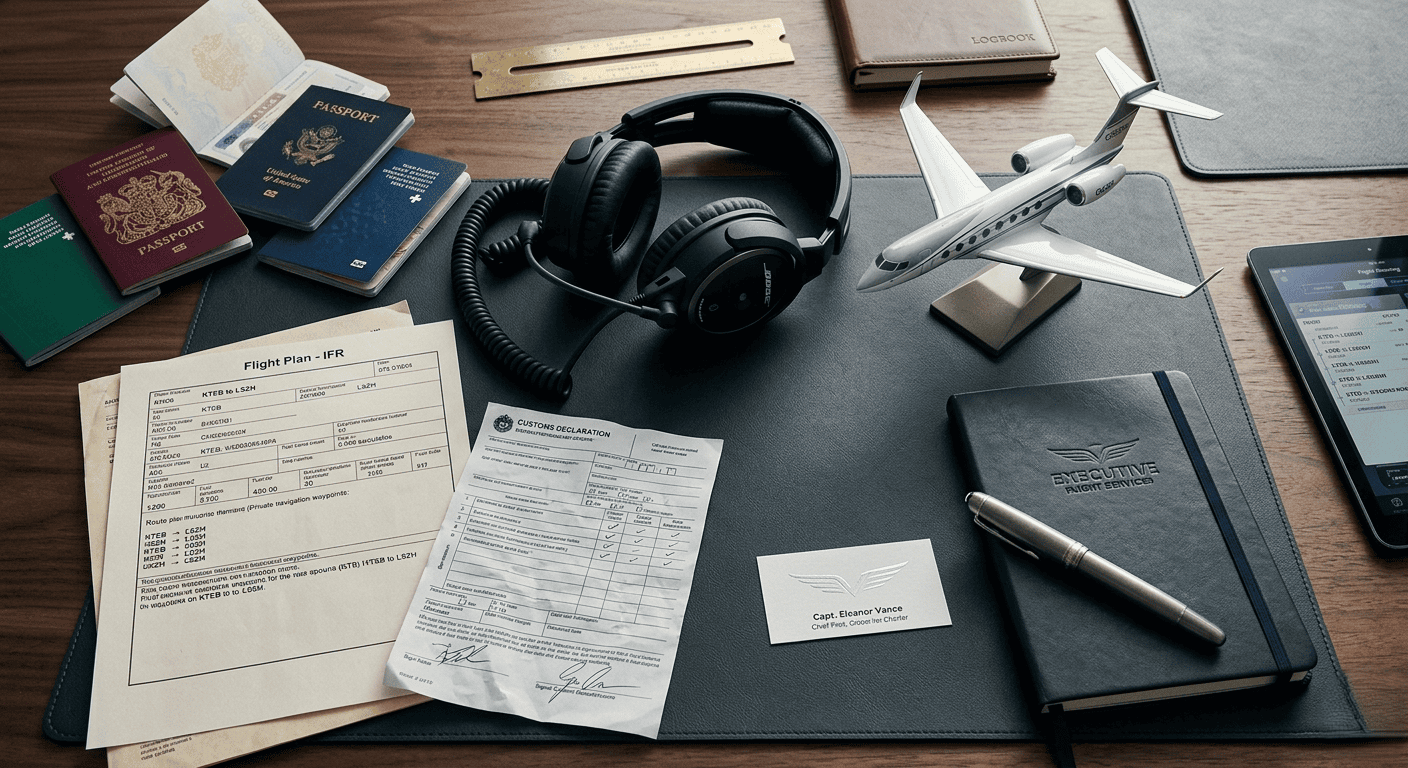
Conclusion: CIQ as a Service Standard, Not an Afterthought
The finest aircraft, the most experienced crew, and the most important passengers deserve a ground experience that matches the standard of the flight. CIQ management is where that promise is delivered or broken.
At EAN Aviation, international clearance is a core service competency, not a peripheral one. Our dedicated CIQ facility at MMIA, Lagos, brings Customs, Immigration, and Quarantine officers on-site and exclusive to our terminal. Combined with our team’s fifteen years of regional expertise and established relationships with border authorities across Africa, that means one thing in practice: your passengers step off the aircraft and through the border as smoothly as they stepped aboard.
Planning an international flight through Lagos? Contact EAN Aviation’s operations team. We handle the border — so your passengers can focus entirely on the business that brought them there.