
Why Top CEOs are choosing FBO services over first class
There was a time when a first-class seat was the ultimate symbol of executive travel the flatbed, the champagne, the priority boarding. But something has shifted. Across boardrooms in Lagos, London, Dubai, and New York, C-suite leaders are quietly making a different choice. They are bypassing commercial terminals entirely and opting for

Fixed Base Operator (FBO) Services—and for very good reason.
This is not simply about luxury. It is about strategy, efficiency, and the very real value of time. Here is why the world’s most productive leaders are making the switch
3.5 hours
Average time lost per commercial flight in airport processes
40%
Of HNIs now prefer private aviation for domestic & regional travel
200+
Airports globally served by top FBO networks
Time is the most valuable currency
For a CEO, every hour has a measurable financial value. Commercial aviation — even in first class — demands significant time investment: check-in queues, security screenings, lounge waits, boarding delays, and baggage collection. A two-hour flight can easily consume five hours of the executive’s day. FBO services eliminate virtually all of this friction. Passengers arrive minutes before departure, clear formalities swiftly, and board directly. On arrival, ground transport is waiting. The time saved, often three to four hours per trip, is time redirected into high-value work.
Privacy and confidentiality
First-class cabins, however elegant, are shared spaces. Sensitive board discussions, merger negotiations, or strategic planning conversations carry real risk in commercial environments even with noise-canceling headphones. FBO lounges and private aircraft offer complete discretion, where conversations stay confidential and the passenger controls who is in the room entirely.
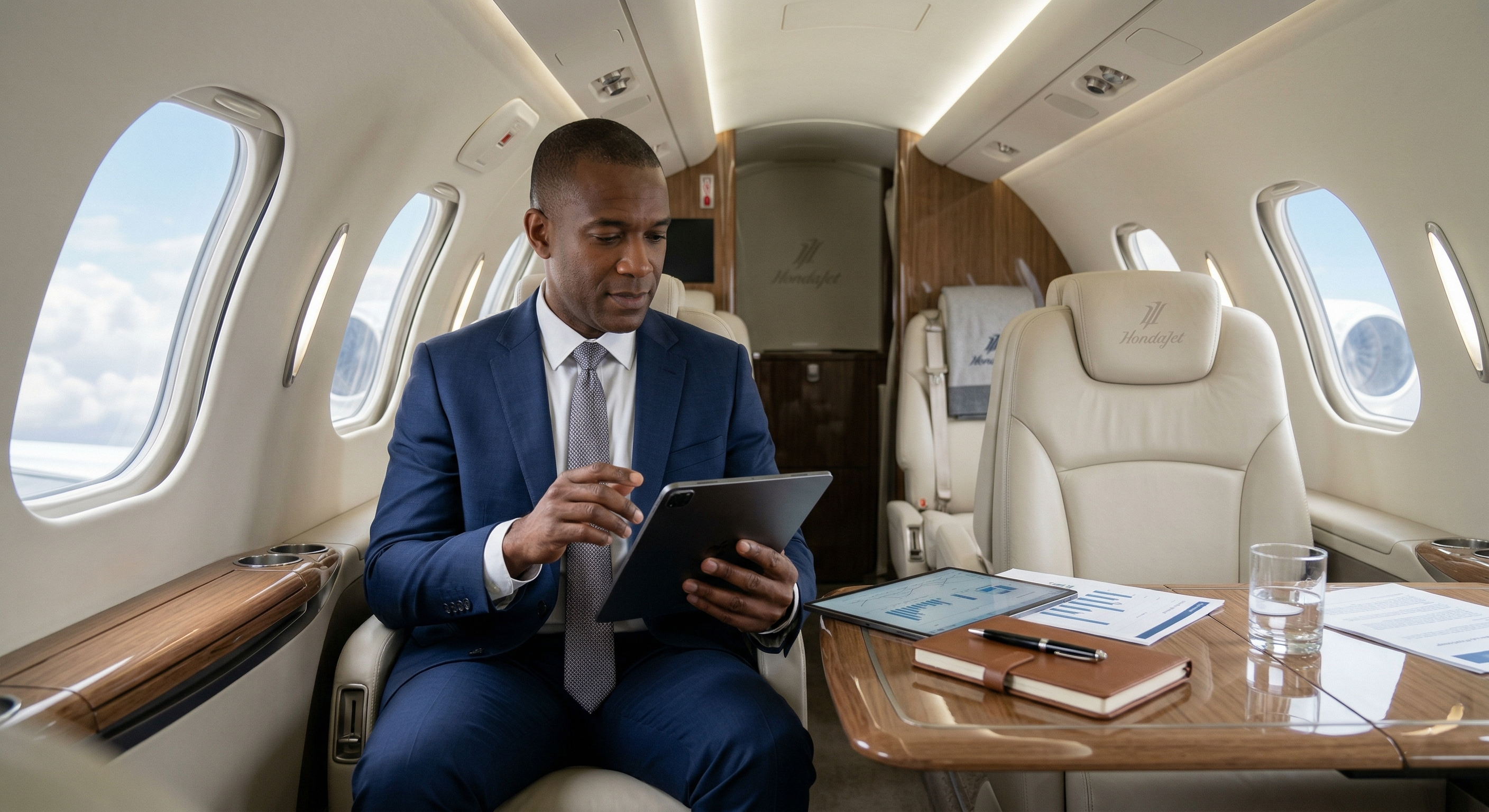
A direct route to productivity
The modern executive does not stop working at 35,000 feet. Industry research from the National Business Aviation Association consistently shows that business aircraft function as productivity multipliers Business jets and FBO-facilitated charters are equipped with high-speed Wi-Fi, conference capabilities, and full communication infrastructure. Unlike commercial cabins where connectivity is unreliable and workspaces are cramped, a private aircraft becomes a flying office — one where meetings can be held, presentations refined, and decisions made in real time.
Flexibility that commercial travel cannot match
Schedules change. Deals evolve. Opportunities do not wait for the next available commercial flight. FBO services give executives the flexibility to depart on their timeline, adjust destinations mid-trip, and access airports that commercial airlines simply do not serve. For operations across Nigeria and West Africa — where business demands can shift rapidly — this flexibility is not a luxury; it is a competitive advantage.
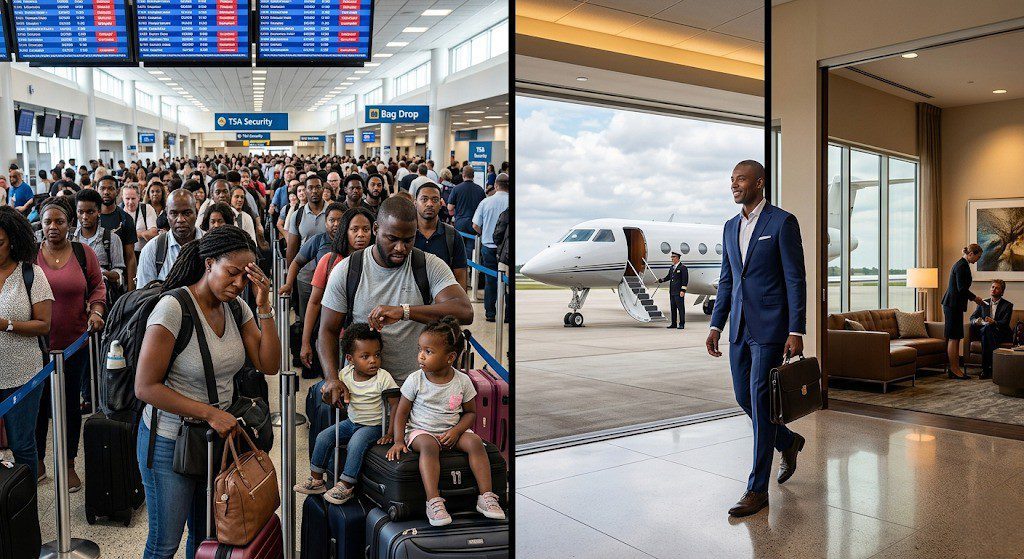
The FBO vs first class comparison
| First class (commercial) | FBO services (private aviation) |
|---|---|
| ✕ 2–4 hrs airport processing time | ✓ Arrive 15–20 mins before departure |
| ✕ Fixed departure schedules | ✓ Depart on your own schedule |
| ✕ Shared lounge & cabin space | ✓ Exclusive lounge & private aircraft |
| ✕ Limited route flexibility | ✓ Access to regional & remote airports |
| ✕ Unreliable in-flight connectivity | ✓ Dedicated onboard connectivity |
| ✕ No confidentiality guarantee | ✓ Complete privacy & discretion |
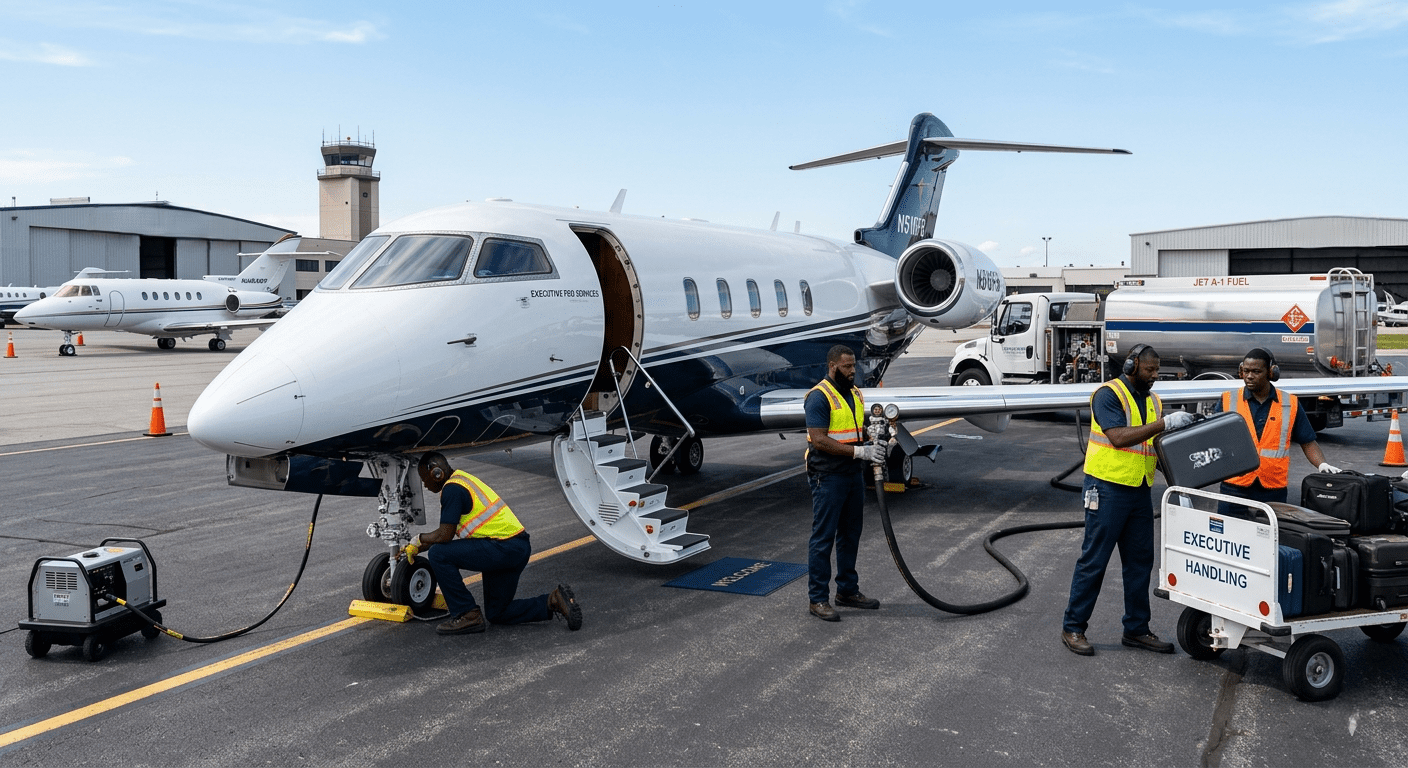
The Africa advantage — why FBO matters more here
In the Nigerian and West African business environment, the case for business aviation is even stronger. Commercial aviation infrastructure across the region presents unique challenges—delays, limited routes, and congested terminals. FBO operators like EAN Aviation offer an integrated alternative: private hangarage, seamless ground handling, dedicated VIP lounges, on-site maintenance, and a team built around executive-level service. Nigeria’s first fully integrated FBO hangar at Murtala Muhammed International Airport in Lagos is a direct response to this demand.
The prestige factor — and why it matters to business
Beyond the practical benefits, perception matters in business. Arriving via a private FBO terminal communicates seriousness, capability, and the kind of operational excellence that builds confidence with partners, investors, and clients. It signals that your time — and theirs — is respected. In high-stakes negotiations and relationship-driven markets like West Africa, how you arrive can shape how you are received.
Conclusion
The shift from first class to FBO services among executives is not a trend — it is a structural change in how high-performing leaders approach business travel. When time, productivity, privacy, and flexibility are non-negotiable, the FBO model does not just compete with first class. It wins comprehensively. For executives operating in Nigeria and across West Africa, the question is no longer whether to explore FBO services — it is how soon.
Ready to Experience the FBO Difference?
Discover how EAN Aviation’s FBO services at Murtala Muhammed International Airport can transform your executive travel. Schedule a private tour of our FBO facility, or speak to our executive aviation team today.