
Private Jet Whole Ownership vs. Fractional Ownership in West Africa: Which Model Makes Business Sense?

In Nigeria’s high-stakes business environment, a private aircraft is no longer just a trophy asset. For executives in oil and gas, banking, and telecoms, it is a productivity multiplier — and often, the difference between closing a deal and missing it entirely.
Nigeria’s private jet fleet has grown from just 44 aircraft in 2005 to over 150 today. The conversation has shifted. The question is no longer “Should we fly private?” It is “How should we structure the ownership?” If you’re new to the space, our Beginner’s Guide to Private Aviation in Nigeria is a good place to start before diving into ownership structures.
For businesses operating across West Africa, where infrastructure gaps, erratic commercial schedules, and FX volatility define the operating environment, the choice between whole ownership and fractional ownership is a capital strategy decision with long-term consequences. This guide breaks down both models, compares them head-to-head, and helps you identify which one fits your mission profile.
What is Private Jet Whole Ownership?
Whole ownership means you (or your company) hold 100% of the aircraft – full control, full responsibility, and full asset. In a market like Nigeria, where time is a direct measure of competitive advantage, this model offers the highest level of operational sovereignty.
- Maximum Availability: The aircraft is ready when you are. There are no “peak day” restrictions, no notice periods, and no competing priorities from other owners.
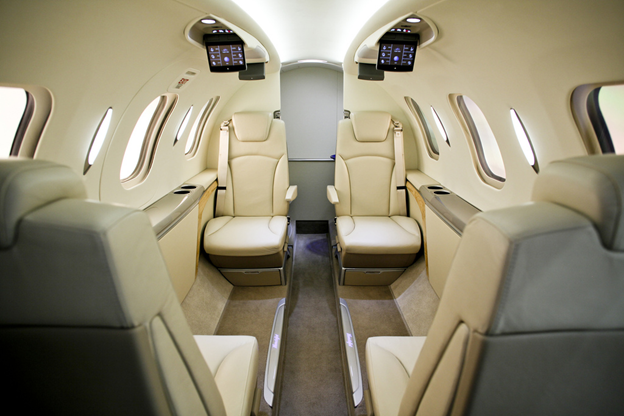
- Customization & Privacy: From the interior livery to the onboard Wi-Fi and the “human sanctuary” of a familiar crew, the environment is entirely yours.
- Revenue Potential: Many Nigerian owners offset high operational costs by placing their aircraft under an aircraft management company (like EAN Aviation) to be chartered out when not in use. This transforms the aircraft from a cost centre into a partial revenue asset.
The Reality Check
You bear 100% of the risk. From FX-sensitive maintenance costs to regulatory compliance and pilot training, the administrative burden is significant unless managed by experts.
What is Fractional Jet Ownership?
Fractional ownership allows you to buy a “share” of an aircraft (typically 1/16th or 50 hours). Think of it as a structured time-share agreement for business aviation, with access to a professionally managed fleet.
This model is gaining rapid traction across West Africa as more enterprises seek the mobility of private aviation without the full capital commitment.
- Lower Entry Point: You access the performance, privacy, and prestige of a multi-million-dollar aircraft at a fraction of the acquisition cost.
- Predictable Costs: You pay for what you use. Monthly management fees and hourly rates are fixed, shielding you from the volatility of individual maintenance events.
- No Positioning Fees: In many fractional models, you only pay for “occupied” hours, meaning you don’t pay to fly an empty plane back to its base in Lagos or Abuja.
The Reality Check
Fractional owners may not fly the same tail number on every trip. Cabin customization is limited to standardized fleet interiors. During high-demand windows like election cycles, major public holidays, or industry conference seasons, booking notice periods can increase, reducing last-minute flexibility.

Comparing the Models: At a Glance
| Feature | Whole Ownership | Fractional Ownership |
|---|---|---|
| Typical Annual Hours | 200+ Hours | 50 – 150 Hours |
| Capital Outlay | High (Multi-million $) | Moderate (Asset Share) |
| Operational Control | 100% (Your Crew, Your Plane) | Fleet access, managed by provider |
| Admin Burden | High (Requires Management partner) | Low (Provider Handles All) |
| Customization | Full Bespoke Interiors | Standardized Fleet |
| Resale Risk | Direct Market Exposure | Defined Buy-back Terms |
The West African Factor: Why Local Variables Change the Calculus
Global aviation brochures rarely account for the realities of operating in Nigeria and across West Africa. Private aviation is already fueling economic growth across the continent, but converting that opportunity into a competitive advantage depends on choosing the right ownership structure for your local operating environment. Before selecting a model, consider the following:
- Foreign Exchange (FX) Volatility: Ground handling fees, cabin crew, maintenance, spare parts, insurance, and fuel are mostly priced in USD. Fractional models often provide more predictable billing, while whole owners must have robust cash flow management to handle USD-denominated invoices.

Global aviation brochures rarely account for the realities of operating in Nigeria and across West Africa. Private aviation is already fueling economic growth across the continent, but converting that opportunity into a competitive advantage depends on choosing the right ownership structure for your local operating environment. Before selecting a model, consider the following:
- Foreign Exchange (FX) Volatility: Ground handling fees, cabin crew, maintenance, spare parts, insurance, and fuel are mostly priced in USD. Fractional models often provide more predictable billing, while whole owners must have robust cash flow management to handle USD-denominated invoices.
- The Regulatory Landscape: The NCAA (Nigerian Civil Aviation Authority) enforces strict requirements for aircraft registration and Part 135 (commercial charter) operations. Whole owners who intend to charter their aircraft require a qualified partner, such as EAN Aviation‘s NCAA-approved AMO, to maintain ongoing compliance, airworthiness documentation, and crew certification. See how EAN Aviation leads on safety standards in Nigeria →
- Operational Geography: Not all Nigerian business missions terminate at major hubs. Frequent travel to remote airstrips for oil field operations, mining sites, or upstream energy projects may make a wholly owned turboprop more practical than a fractional share in a light jet restricted to paved, major-hub runways.
Decision Time: Which One Fits You?
The choice boils down to utilization and intent.
Choose whole ownership if: Your organization flies more than 200 hours annually, requires complete confidentiality and cabin continuity, and has the infrastructure, or a management partner, to handle compliance and operations. Tier-1 financial institutions and multinationals with active regional travel programs typically fall into this category.
Choose fractional ownership if: You fly between 50 and 150 hours per year and want the benefits of private aviation without the operational complexity of aircraft ownership. Growing enterprises and high-net-worth individuals who need reliable, premium mobility, on demand, are the ideal fractional candidates.

How EAN Aviation Can Help
Besides aircraft acquisition, EAN Aviation is not just an FBO. We are a full-service aviation partner operating from Murtala Muhammed International Airport, Lagos, with an NCAA-approved AMO, a VIP passenger lounge, and a dedicated aircraft management division.
Whether you are evaluating a wholly owned asset that needs a professional management structure or exploring on-demand charter as a first step into private aviation, EAN Aviation provides the expertise, regulatory standing, and operational infrastructure to support your aviation strategy across West Africa.
Visit the EAN Aviation website or fill out our inquiry form to discover how we can support every stage of your journey, from concept to takeoff.
This article is very good and easy to appreciate. The site is useful for continuous
learning.